
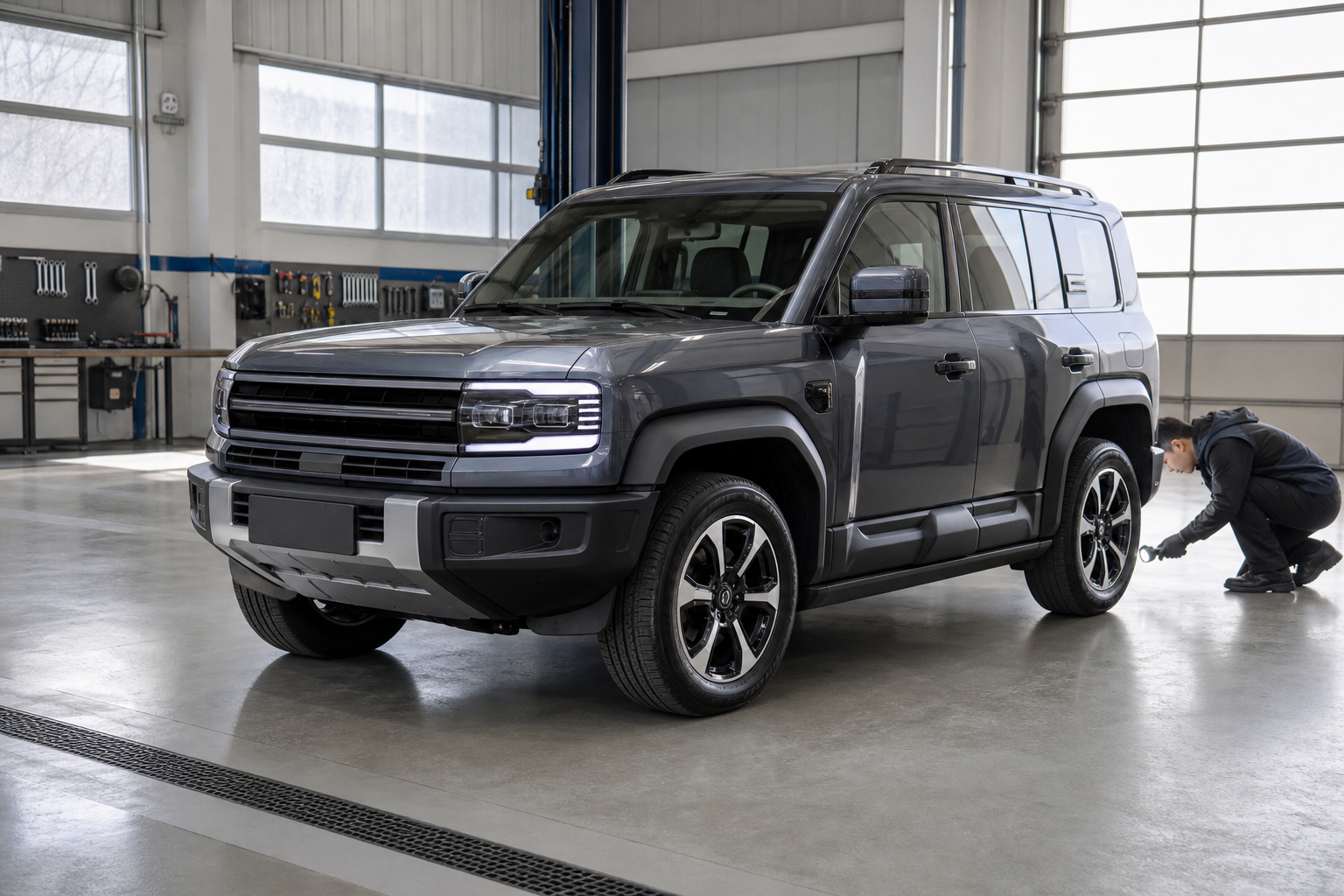
The decision on inspect a used bao 5 beyond the body panels stays attached to one selected VIN. Record start with identity and history, inspect structure and body and examine the underbody before comparing routes; keep test powertrain and energy systems, assess running gear and verify cabin and accessories visible through quotation and handover.
Continue the evidence route: Use dedicated records for the five-wheel and brake inspection, the suspension system and any water-exposure evidence. Continue frame or repair evidence through the Bao 5 accident and structural repair checks, and keep low-voltage warnings in the 12V battery and storage route.
Start with identity and history
Reconcile VIN, plates, mileage, registration, service and repair records. Look for date or mileage conflicts and ask for source documents rather than a seller summary. When reviewing a traction-battery claim, check the health-report method, conditions and limitations.
Evidence threshold. For start with identity and history, Photograph odometer and VIN in the same visit. Link start with identity and history to the VIN and source date. Name who checked start with identity and history, and retain enough detail for another reviewer to reproduce the result.
For an accessorised candidate, add the off-road modification record review.
Inspect structure and body
Check panel alignment, paint readings, glazing, seals, corrosion, repair evidence and mounting points. Distinguish cosmetic trail marks from structural or water-related concerns.
Failure condition. For inspect structure and body, Map findings by panel and severity. If inspect structure and body stays open, specify whether to reject, reprice or reinspect. Do not treat seller silence about inspect structure and body as supporting evidence.
Examine the underbody
Inspect protection plates, frame areas, suspension mounts, battery enclosure, fluid leaks, impact marks and poorly fitted accessories. Cleaned surfaces can still require close lighting and photographs.
Destination effect. Record every inaccessible shielded area. Ask the destination adviser whether examine the underbody changes customs or registration. Check charging, road use and service separately when examine the underbody affects them, then retain the dated response.
Test powertrain and energy systems
Check cold start where possible, engine behaviour, hybrid transitions, drive modes, charging, cooling, warnings, diagnostics and fault history. State test duration and operating conditions.
Cost effect. Keep raw diagnostic output with the report. Price test powertrain and energy systems as its own inspection or preparation line. If test powertrain and energy systems creates compliance risk, show the contingency clearly rather than burying it in a general discount.
Assess running gear
Review tyres, wheels, brakes, steering, suspension, alignment symptoms and differential-lock operation where fitted and safe. Uneven tyre wear may reveal more than tread depth alone.
Custody check. List tyre brand, size, date and measured tread. Reconfirm assess running gear at each custody transfer. Seller, inspector, transporter and port records for assess running gear should remain dated and tied to the same VIN.
Verify cabin and accessories
Test screens, cameras, keys, windows, seats, climate, outlets, assistance systems and fitted recovery or tow equipment. Identify regional digital dependencies separately.
Replacement rule. Mark each function tested, failed or not tested. A substitute must repeat every check for verify cabin and accessories. Similar colour, mileage or trim cannot transfer the previous VIN’s conclusion about verify cabin and accessories to another vehicle.
Close the file without hiding open items.
Close “Inspect a Used Bao 5 Beyond the Body Panels” with the candidate VIN, source date and the evidence used for start with identity and history and inspect structure and body. Name rejected alternatives and unresolved questions, then assign responsibility for assess running gear and verify cabin and accessories. A changed vehicle or destination reopens the affected checks.
- Start with identity and history: confirmed / open / not applicable
- Inspect structure and body: confirmed / open / not applicable
- Examine the underbody: confirmed / open / not applicable
- Test powertrain and energy systems: confirmed / open / not applicable
- Assess running gear: confirmed / open / not applicable
- Verify cabin and accessories: confirmed / open / not applicable
Three questions before commitment
What closes “Start with identity and history”?
Photograph odometer and VIN in the same visit. For start with identity and history, attach a dated source and candidate identifier, then name who produced or verified the record. A listing label is not enough to close this checkpoint.
What closes “Inspect structure and body”?
Map findings by panel and severity. Mark inspect structure and body as confirmed only when the supporting record matches the VIN and route assumptions. Otherwise show the item as open in the quotation or inspection scope.
What closes “Examine the underbody”?
Record every inaccessible shielded area. If records about examine the underbody conflict, preserve both sources and ask the responsible party to resolve the difference before deposit, preparation or shipping instructions.