
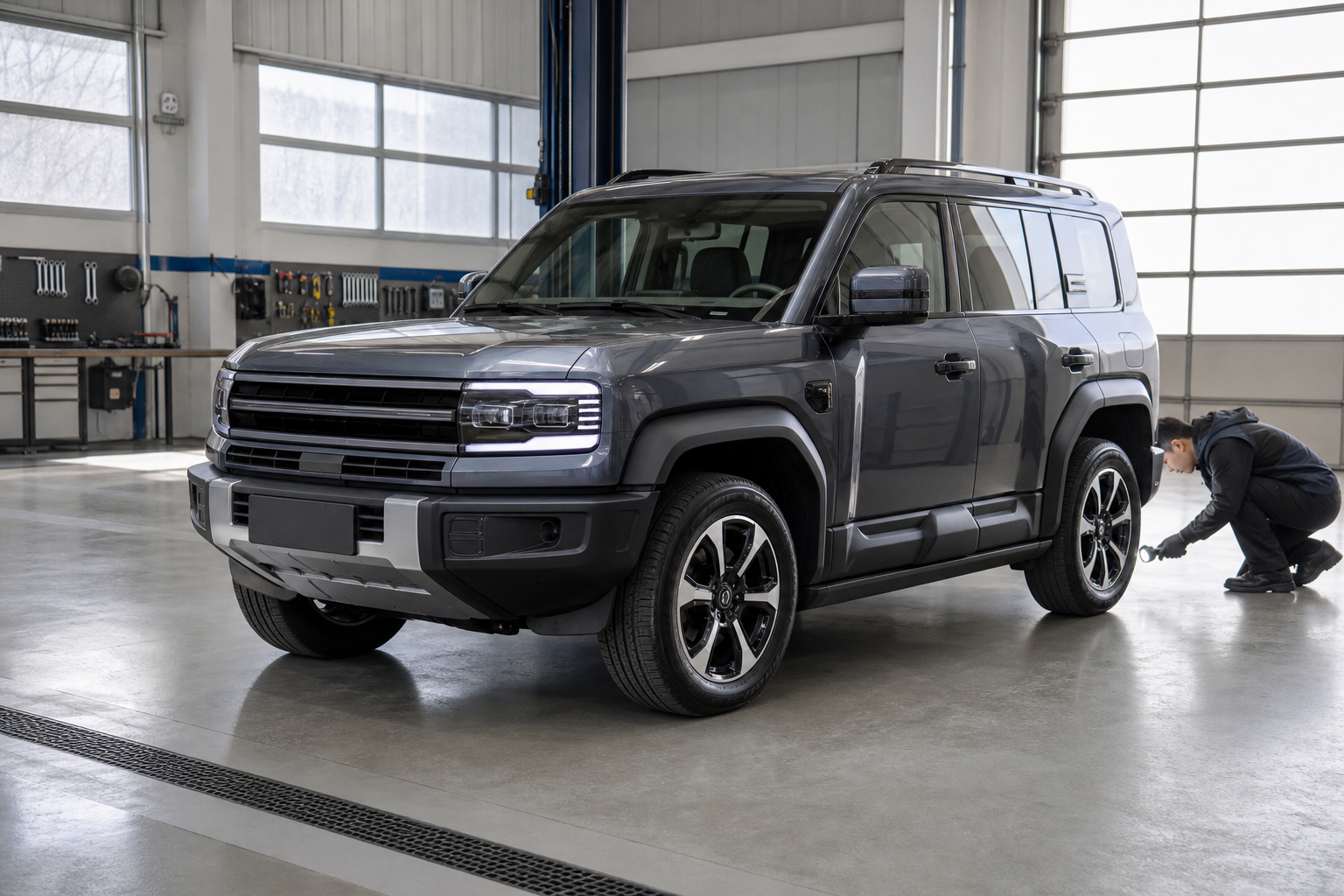
The decision on check a used bao 5 for accident and structural repair stays attached to one selected VIN. Record build the event timeline, inspect frame and body geometry and trace force into running gear before comparing routes; keep protect the energy systems, verify restraints and sensors and repeat after corrective work visible through quotation and handover.
Continue the evidence route: Start inside the used Bao 5 inspection, map lower damage through the underbody and battery route, and send sensor work to the ADAS verification guide.
Build the event timeline
Compare claim, recovery, service and seller records with dated media and current condition.
Evidence threshold. For build the event timeline, Record source, date, event description and unresolved contradiction. Link build the event timeline to the VIN and source date. Name who checked build the event timeline, and retain enough detail for another reviewer to reproduce the result.
Inspect frame and body geometry
Check rails, crossmembers, mounts, seams, welds, fasteners, panel fit and measurements.
Failure condition. For inspect frame and body geometry, Map every repair or deformation to a fixed vehicle reference. If inspect frame and body geometry stays open, specify whether to reject, reprice or reinspect. Do not treat seller silence about inspect frame and body geometry as supporting evidence.
Trace force into running gear
Inspect suspension mounts, steering, axles, wheels, tyres and alignment evidence after relevant impacts.
Destination effect. Separate replaced parts from undiagnosed geometry. Ask the destination adviser whether trace force into running gear changes customs or registration. Check charging, road use and service separately when trace force into running gear affects them, then retain the dated response.
Protect the energy systems
Inspect shields, enclosure-adjacent structure, lines and connectors without unauthorised high-voltage dismantling.
Cost effect. Refer isolation or enclosure concerns to qualified personnel. Price protect the energy systems as its own inspection or preparation line. If protect the energy systems creates compliance risk, show the contingency clearly rather than burying it in a general discount.
Verify restraints and sensors
Check airbags, belts, pretensioners, cameras, radar, parking sensors and calibration records.
Custody check. Preserve scans and repair documents before codes are cleared. Reconfirm verify restraints and sensors at each custody transfer. Seller, inspector, transporter and port records for verify restraints and sensors should remain dated and tied to the same VIN.
Repeat after corrective work
Recheck geometry, diagnostics, alignment, road behaviour and affected functions.
Replacement rule. Set pass, hold or reject with named open items. A substitute must repeat every check for repeat after corrective work. Similar colour, mileage or trim cannot transfer the previous VIN’s conclusion about repeat after corrective work to another vehicle.
Separate trail marks from collision repair
Scrapes on removable protection and deformation of frame or mounting structure carry different consequences.
Do not price before scope is known
A discount cannot define whether the repair affects safety, calibration, high-voltage protection or destination acceptance.
Control replacement parts identity
Confirm that fitted structural, restraint and sensor parts match the exact production version.
Freeze handover condition
Preserve frame, underbody, wheel and body evidence again before loading.
Primary model and market references
Official sources describe their own publication date and market. Confirm the selected VIN before applying a figure.
Close the file without hiding open items.
Close “Check a Used Bao 5 for Accident and Structural Repair” with the candidate VIN, source date and the evidence used for build the event timeline and inspect frame and body geometry. Name rejected alternatives and unresolved questions, then assign responsibility for verify restraints and sensors and repeat after corrective work. A changed vehicle or destination reopens the affected checks.
- Build the event timeline: confirmed / open / not applicable
- Inspect frame and body geometry: confirmed / open / not applicable
- Trace force into running gear: confirmed / open / not applicable
- Protect the energy systems: confirmed / open / not applicable
- Verify restraints and sensors: confirmed / open / not applicable
- Repeat after corrective work: confirmed / open / not applicable
Three questions before commitment
What closes “Build the event timeline”?
Record source, date, event description and unresolved contradiction. For build the event timeline, attach a dated source and candidate identifier, then name who produced or verified the record. A listing label is not enough to close this checkpoint.
What closes “Inspect frame and body geometry”?
Map every repair or deformation to a fixed vehicle reference. Mark inspect frame and body geometry as confirmed only when the supporting record matches the VIN and route assumptions. Otherwise show the item as open in the quotation or inspection scope.
What closes “Trace force into running gear”?
Separate replaced parts from undiagnosed geometry. If records about trace force into running gear conflict, preserve both sources and ask the responsible party to resolve the difference before deposit, preparation or shipping instructions.