
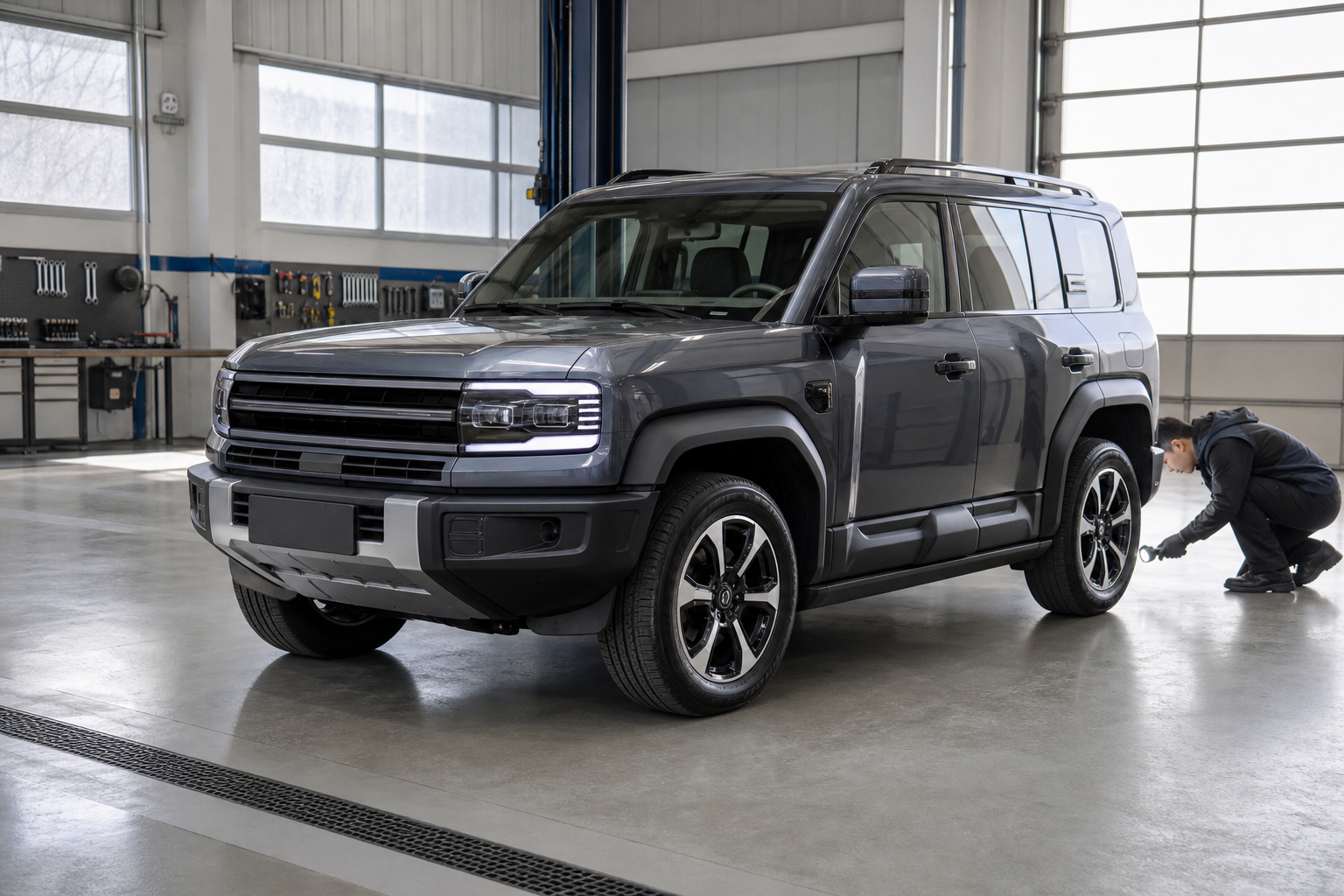
Create a modification inventory
Ask for a list of non-original tyres, wheels, suspension components, protection, lighting, racks, towing equipment and other additions. Include items removed before sale, because earlier installations can leave effects behind. Request invoices, part identifiers, installation dates and photographs. Distinguish factory options from dealer or aftermarket work using the version and option record. If the seller cannot identify an accessory, record it as unverified. An attractive branded label is not a substitute for evidence that the component suits the actual vehicle.
Check fitment and installation quality
A qualified inspector should review mounting, clearances, wiring and accessible signs of damage within the agreed scope. Do not crawl beneath an unsupported vehicle or loosen unfamiliar equipment to inspect it. Ask whether installation required drilling, cutting or alteration of original components. Such changes need a clear assessment rather than automatic acceptance or rejection. Where a critical attachment is obscured, note the limitation and obtain further qualified access if necessary. The report should explain what was examined, not simply state that the car has many accessories.
Review suspension and wheel changes together
Tyre size, wheel specification and suspension changes can interact with clearance, loading and vehicle systems. Do not infer suitability from the absence of rubbing during a short stationary demonstration. Use the wheel and tyre review and, where fitted, the hydraulic suspension assessment. Ask the provider to confirm compatibility with the actual configuration. A modified appearance does not establish safe operating limits, and a return to standard-looking wheels does not prove that every earlier alteration has been reversed correctly.
Investigate evidence of use beneath protection
Protective plates and accessories can obscure impact evidence. Arrange a qualified inspection of accessible areas and clarify whether authorised removal is needed for meaningful assessment. Compare findings with the underbody and water-exposure checks. Scratches may be cosmetic, but their significance depends on location and underlying condition. Do not assume that expensive protection prevented all damage. Equally, do not treat every mark as a serious fault. Ask for a reasoned assessment that distinguishes visible accessory wear from vehicle damage or unresolved access limitations.
Confirm destination acceptance independently
Road-use approval, lighting, dimensions, towing and modification rules depend on the destination. Provide the configuration to a qualified local adviser before purchase and ask what evidence or rectification is required. An origin-market registration or installer assurance does not automatically settle destination acceptance. Avoid presenting an accessory as legal everywhere. If returning to standard specification is proposed, identify the required parts, labour and verification first. A simple promise to remove the extras may not address wiring changes, mounting alterations or missing original components.
Calculate the completed configuration cost
Separate accessories the buyer actually needs from those that create removal or maintenance work. Obtain a quote for any required rectification, including associated inspection and local compliance work. Consider effects on the payload and loading plan rather than treating added equipment as weightless. Original parts supplied with the car should be inventoried and checked. Compare a modified candidate with a standard one on completed suitability and support, not the seller's original accessory spend or the visual impression of expedition readiness.
Define what must be verified before acceptance
Suppose a Bao 5 has a documented rack and ordinary cosmetic protection, while another has unidentified suspension and wiring changes. These require different levels of review. Set conditions for missing records, technical inspection, destination advice and any reinstatement work. Do not ask for extreme driving or recovery demonstrations to prove capability. The acceptance decision should state the delivered configuration and its unresolved limitations. If essential modifications cannot be substantiated or supported, selecting a less modified candidate can be more predictable than purchasing an uncertain repair project.
Buyer checklist
- Inventory current and previously removed modifications.
- Assess installation, underlying condition and interacting systems.
- Obtain destination advice for the actual delivered configuration.
- Price rectification and missing original parts before acceptance.
Questions and answers
Do expensive accessories increase the purchase value automatically?
No. Their suitability, condition, documentation and usefulness to the buyer matter. Some additions create removal, support or destination-compliance costs.
Does underbody protection prove there was no damage?
No. Protection can obscure areas that need inspection. Arrange qualified access and retain any limits on what could be assessed.
Reference information
Use the applicable market and year documentation for equipment and operating limits. The references have their own market and publication scope; they do not establish the condition, fitted equipment or destination approval of an individual vehicle.
Continue with the off-road capability guide, or send your vehicle requirements.