
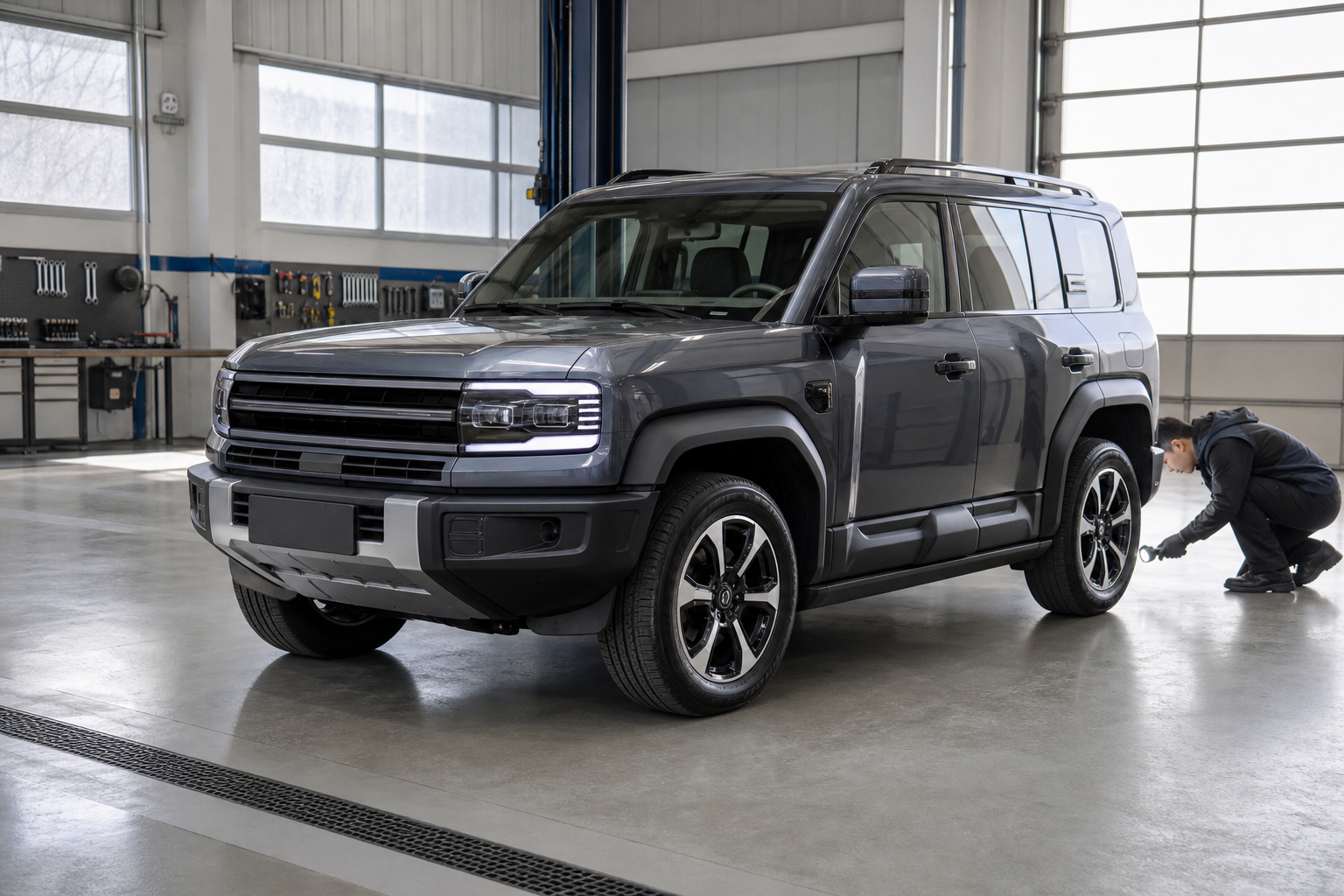
The decision on inspect bao 5 tyres, wheels, spare and brakes stays attached to one selected VIN. Record verify size, construction and rating, inspect off-road damage and audit the full-size spare before comparing routes; keep prove tpms operation, measure brakes and hubs and connect alignment to structure visible through quotation and handover.
Continue the evidence route: Use this corner-by-corner inspection with the terrain hardware guide, carry findings into the parts and service plan, and recalculate loads through the payload and accessory guide.
Verify size, construction and rating
Read every tyre sidewall and the vehicle pressure label for size, load index, speed rating, construction and recommended pressure. Do not approve an 18- or 20-inch fitment because it appears on another Bao 5 configuration sheet.
Evidence threshold. For verify size, construction and rating, Record all four road tyres and the spare by wheel position. Link verify size, construction and rating to the VIN and source date. Name who checked verify size, construction and rating, and retain enough detail for another reviewer to reproduce the result.
Inspect off-road damage
Check cuts, bulges, bead damage, puncture repairs, tread tearing, uneven wear, embedded debris and wheel impact. Inspect the inner sidewalls and barrels where trail marks or exterior cleaning could hide damage.
Failure condition. For inspect off-road damage, Photograph damage before cleaning or tyre dressing. If inspect off-road damage stays open, specify whether to reject, reprice or reinspect. Do not treat seller silence about inspect off-road damage as supporting evidence.
Audit the full-size spare
Confirm tyre age, pressure, matching diameter, wheel condition, carrier, fasteners, cover and removal tools. A rear-mounted wheel may be decorative, mismatched or difficult to remove after corrosion or modification.
Destination effect. Demonstrate removal and refitting without damaging sensors or trim. Ask the destination adviser whether audit the full-size spare changes customs or registration. Check charging, road use and service separately when audit the full-size spare affects them, then retain the dated response.
Prove TPMS operation
Check the pressure-display system, warning self-test, sensor IDs and learning state where diagnostic access permits. Different wheel packages, replaced sensors or a rotated spare can create misleading data even when no warning remains illuminated.
Cost effect. Save displayed pressures beside a calibrated manual reading. Price prove tpms operation as its own inspection or preparation line. If prove tpms operation creates compliance risk, show the contingency clearly rather than burying it in a general discount.
Measure brakes and hubs
Inspect discs, pads, calipers, hoses, fluid, parking brake, bearings and hub play. Run a safe road test for pull, vibration, noise and pedal consistency, noting that heavy vehicle mass, towing and terrain can change wear patterns.
Custody check. State measured, visually inspected and untested items separately. Reconfirm measure brakes and hubs at each custody transfer. Seller, inspector, transporter and port records for measure brakes and hubs should remain dated and tied to the same VIN.
Connect alignment to structure
Uneven wear or steering offset can come from pressure, alignment, suspension damage, wheel impact or prior body repair. Do not close the issue with an alignment printout until joints, suspension, chassis and wheel run-out support the result.
Replacement rule. Retest steering position and wear after any corrective work. A substitute must repeat every check for connect alignment to structure. Similar colour, mileage or trim cannot transfer the previous VIN’s conclusion about connect alignment to structure to another vehicle.
Create a five-wheel register
Use one row per road wheel plus the spare with size, brand, production code, tread depth, pressure, repair, wheel damage, sensor status and image reference. This makes a mismatched or aged spare visible and supports replacement planning before the vehicle reaches a market with limited stock.
Price the complete correction
A safe remedy may involve a matched axle or full set, valves, sensors, wheel repair, brake components, fluid, alignment and labour. Separate trail-oriented upgrades from restoring the verified factory package. Check diameter, load and clearance before approving any alternate tyre.
Retest after suspension or accessory work
Changes to suspension height, roof and towing load, recovery equipment or wheel offset can affect steering, pressures and clearance. Repeat alignment, TPMS and road checks after preparation; do not carry the pre-modification approval into the final handover.
Freeze port condition
Record tyre pressure, tread, wheel faces, odometer, brake warnings and spare security before inland movement and loading. Use the same wheel positions on arrival. This creates a stronger boundary for pressure loss, impact or theft claims during transport.
Primary model and market references
Official sources describe their own publication date and market. Confirm the selected VIN before applying a figure.
Close the file without hiding open items.
Close “Inspect Bao 5 Tyres, Wheels, Spare and Brakes” with the candidate VIN, source date and the evidence used for verify size, construction and rating and inspect off-road damage. Name rejected alternatives and unresolved questions, then assign responsibility for measure brakes and hubs and connect alignment to structure. A changed vehicle or destination reopens the affected checks.
- Verify size, construction and rating: confirmed / open / not applicable
- Inspect off-road damage: confirmed / open / not applicable
- Audit the full-size spare: confirmed / open / not applicable
- Prove TPMS operation: confirmed / open / not applicable
- Measure brakes and hubs: confirmed / open / not applicable
- Connect alignment to structure: confirmed / open / not applicable
Three questions before commitment
What closes “Verify size, construction and rating”?
Record all four road tyres and the spare by wheel position. For verify size, construction and rating, attach a dated source and candidate identifier, then name who produced or verified the record. A listing label is not enough to close this checkpoint.
What closes “Inspect off-road damage”?
Photograph damage before cleaning or tyre dressing. Mark inspect off-road damage as confirmed only when the supporting record matches the VIN and route assumptions. Otherwise show the item as open in the quotation or inspection scope.
What closes “Audit the full-size spare”?
Demonstrate removal and refitting without damaging sensors or trim. If records about audit the full-size spare conflict, preserve both sources and ask the responsible party to resolve the difference before deposit, preparation or shipping instructions.