
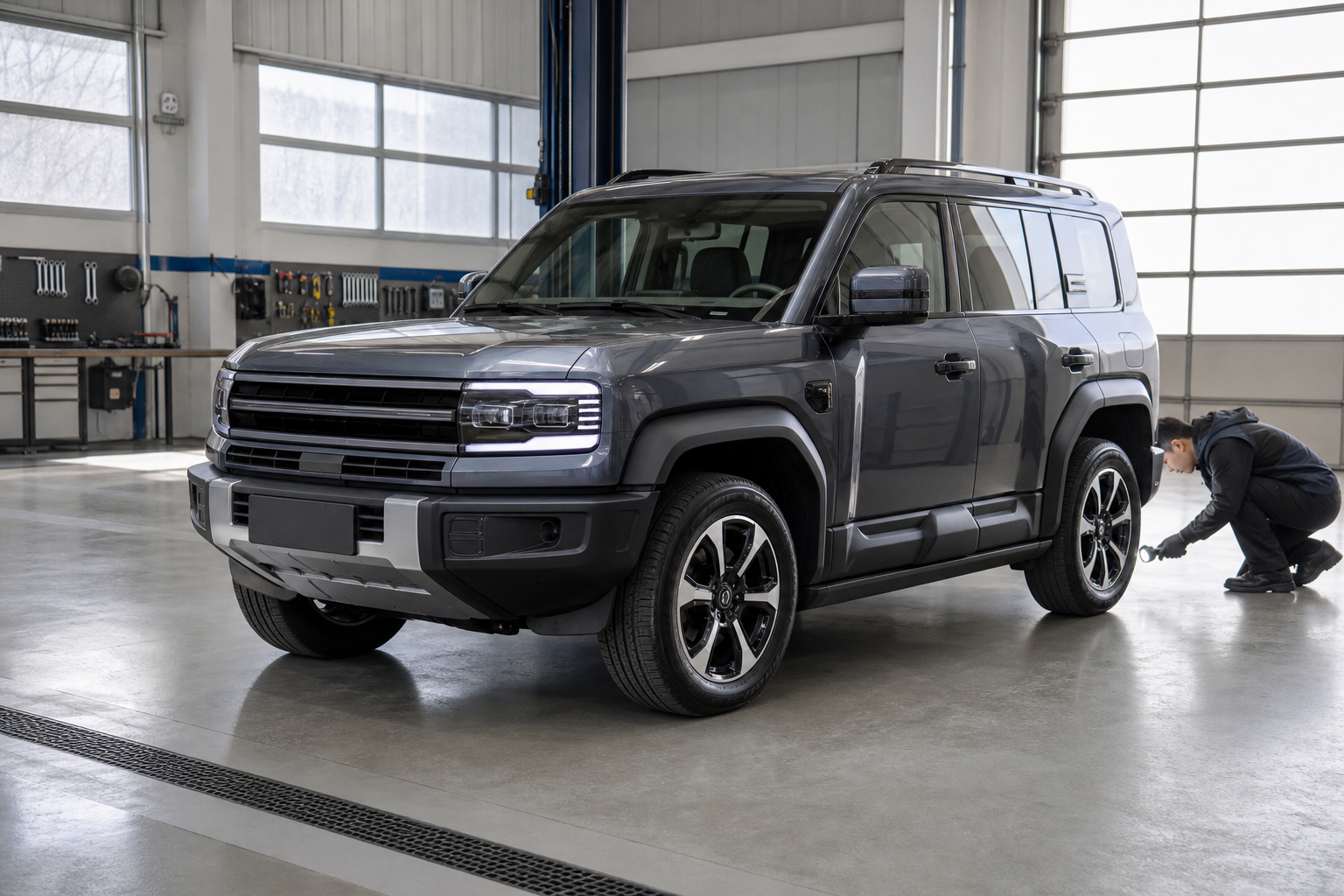
The decision on match bao 5 hardware to the intended terrain stays attached to one selected VIN. Record define the terrain, verify locks and modes and inspect clearance protection before comparing routes; keep choose tyres for the route, respect payload and roof limits and build a recovery plan visible through quotation and handover.
Continue the evidence route: Match the route to the verified suspension hardware, inspect the tyres, spare and brakes, and treat claimed wading through the water-exposure guide.
Define the terrain
Separate gravel travel, sand, mud, rock, snow, water crossings and steep tracks. Each places different demands on tyres, cooling, clearance, traction and recovery equipment. If the trip depends on portable electrical loads, verify the V2L equipment and camping-power plan. For an accessorised candidate, review the off-road modification and installation records.
Evidence threshold. For define the terrain, Describe the hardest expected section, not the average road. Link define the terrain to the VIN and source date. Name who checked define the terrain, and retain enough detail for another reviewer to reproduce the result.
Verify locks and modes
Confirm which differential locks and terrain modes are physically fitted and operational on the candidate. Demonstrate controls and warning behaviour without testing irresponsibly on a workshop floor.
Failure condition. For verify locks and modes, Record fitted hardware and safe functional evidence. If verify locks and modes stays open, specify whether to reject, reprice or reinspect. Do not treat seller silence about verify locks and modes as supporting evidence.
Inspect clearance protection
Measure relevant clearances and inspect skid protection, steps, tow points and vulnerable components. Accessories may reduce clearance or transfer loads into unsuitable mounting points.
Destination effect. Photograph the lowest and previously contacted areas. Ask the destination adviser whether inspect clearance protection changes customs or registration. Check charging, road use and service separately when inspect clearance protection affects them, then retain the dated response.
Choose tyres for the route
Size, load rating, construction, tread, pressure strategy and replacement availability matter. Aggressive tyres can add noise, consumption and steering effects on road.
Cost effect. Plan a destination-supported tyre specification. Price choose tyres for the route as its own inspection or preparation line. If choose tyres for the route creates compliance risk, show the contingency clearly rather than burying it in a general discount.
Respect payload and roof limits
Passengers, luggage, recovery gear, water, fuel and roof equipment consume capacity. Use documented limits and axle information rather than visual space.
Custody check. Create a realistic loaded inventory before purchase. Reconfirm respect payload and roof limits at each custody transfer. Seller, inspector, transporter and port records for respect payload and roof limits should remain dated and tied to the same VIN.
Build a recovery plan
Suitable rated points, equipment, communications, training and a second-vehicle strategy may be more important than another accessory. Do not describe a vehicle as expedition-ready without them.
Replacement rule. Assign recovery equipment and responsibilities to the route. A substitute must repeat every check for build a recovery plan. Similar colour, mileage or trim cannot transfer the previous VIN’s conclusion about build a recovery plan to another vehicle.
Close the file without hiding open items.
Close “Match Bao 5 Hardware to the Intended Terrain” with the candidate VIN, source date and the evidence used for define the terrain and verify locks and modes. Name rejected alternatives and unresolved questions, then assign responsibility for respect payload and roof limits and build a recovery plan. A changed vehicle or destination reopens the affected checks.
- Define the terrain: confirmed / open / not applicable
- Verify locks and modes: confirmed / open / not applicable
- Inspect clearance protection: confirmed / open / not applicable
- Choose tyres for the route: confirmed / open / not applicable
- Respect payload and roof limits: confirmed / open / not applicable
- Build a recovery plan: confirmed / open / not applicable
Three questions before commitment
What closes “Define the terrain”?
Describe the hardest expected section, not the average road. For define the terrain, attach a dated source and candidate identifier, then name who produced or verified the record. A listing label is not enough to close this checkpoint.
What closes “Verify locks and modes”?
Record fitted hardware and safe functional evidence. Mark verify locks and modes as confirmed only when the supporting record matches the VIN and route assumptions. Otherwise show the item as open in the quotation or inspection scope.
What closes “Inspect clearance protection”?
Photograph the lowest and previously contacted areas. If records about inspect clearance protection conflict, preserve both sources and ask the responsible party to resolve the difference before deposit, preparation or shipping instructions.