
Verify equipment and instructions
Ask for the vehicle's applicable external-power documentation and the labels on any supplied discharge device. Establish whether the equipment is original, approved replacement or unidentified. The version guide helps organise the candidate, but actual fitted equipment still needs confirmation. A connector or menu icon is insufficient on its own. Do not improvise an adapter to make a domestic plug fit. If the function or accessory cannot be verified, exclude it from the promised vehicle capability until the seller or qualified provider resolves the question.
List appliances rather than vague activities
Write down each intended appliance, its rated demand and any starting behaviour that the manufacturer specifies. Lighting, refrigeration and heating equipment create different demands. A label on one device does not establish the total simultaneous load. Ask an appropriately qualified adviser to review any uncertain combination against the vehicle and accessory instructions. Avoid assuming that a successful test with a phone charger proves a cooking or workshop setup. The plan should identify what can operate together and what must remain disconnected, without relying on a guessed limit.
Separate power demand from energy duration
Power describes the operating demand at a moment; energy use also depends on how long equipment runs. A modest continuous load can matter over an extended stay. Estimate the intended duration and keep the calculation clearly conditional on actual appliance behaviour and vehicle limits. Do not promise a fixed number of camping days from the badge alone. Link the plan to the route and energy assessment, including arrival state and the reserve needed to leave the campsite or reach a verified replenishment point.
Use the function only in suitable conditions
Follow the vehicle and accessory instructions on location, weather protection, cable handling and supported operation. Damaged equipment, unsuitable wet conditions or improvised connections require stopping and obtaining appropriate advice. Never connect the vehicle to a building's wiring through a makeshift backfeed arrangement. Vehicle-to-load use is not automatically an approved home backup installation. Keep cables away from traffic and other foreseeable hazards. For a worksite or shared campsite, confirm the site's rules and responsibilities rather than assuming that permission to park includes permission for any electrical setup.
Account for powertrain behaviour safely
A plug-in hybrid may have operating behaviours that differ from a battery-only vehicle. Follow the applicable Bao 5 instructions and never assume the engine cannot start while the vehicle is in a supported operating mode. Do not use a setup in an enclosed or inadequately ventilated area. The exact conditions and permitted use belong to the manual for the vehicle. If those instructions are unclear in translation, obtain competent clarification before use rather than treating a quiet demonstration as proof that combustion operation is impossible.
Include the accessory in the inspection
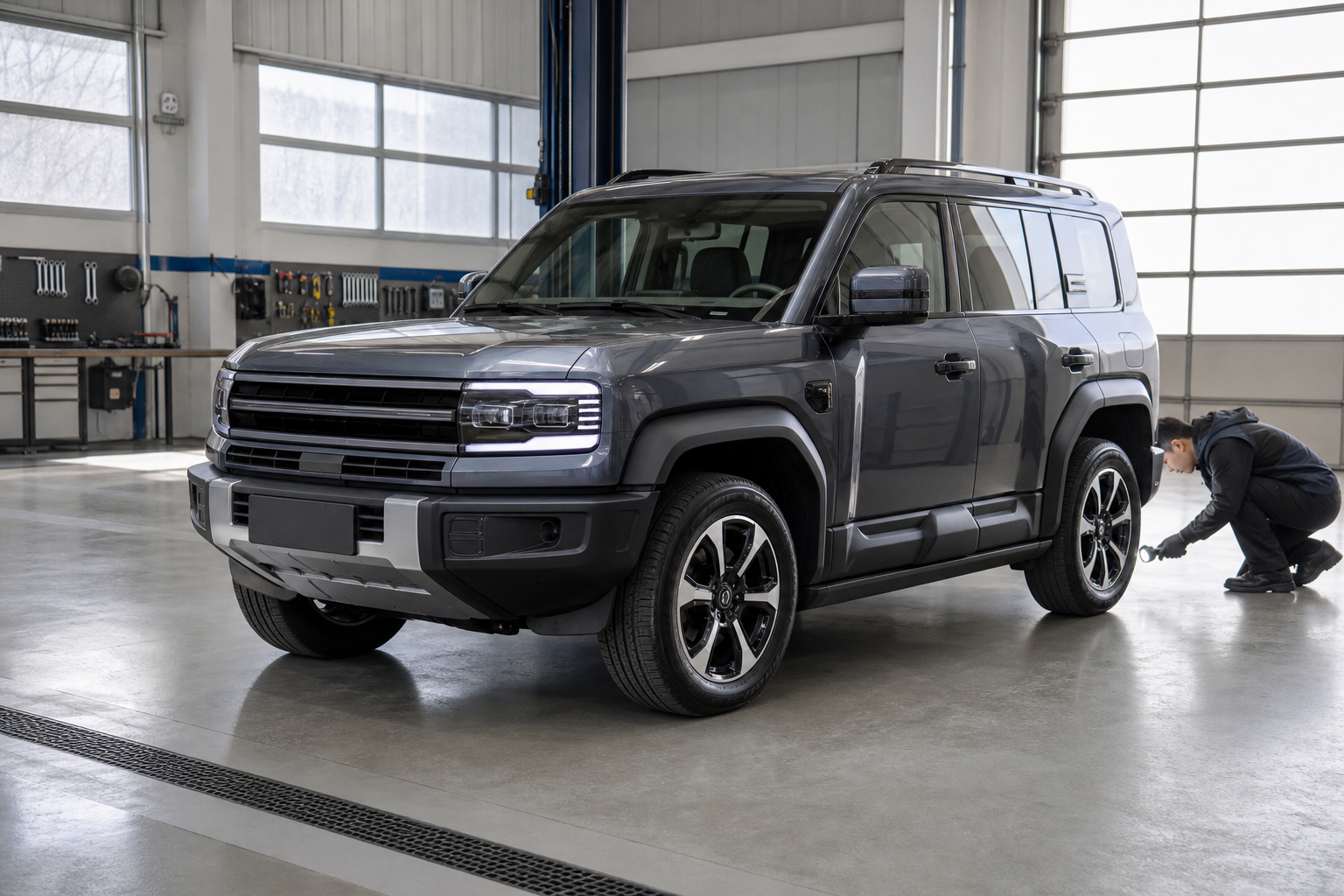
Ask the inspector to photograph the supplied device, inspect accessible condition and demonstrate supported operation with a suitable ordinary load where safe and authorised. Record the scope and any warnings. A successful brief demonstration does not establish every appliance combination or long-duration performance. Keep the accessory inventory with the handover file. If equipment is missing or damaged, obtain a verified replacement route and cost instead of accepting an unspecified adapter as equivalent. The delivered package should match the capability used in the buying decision.
Build a fallback into the trip
Suppose refrigeration is essential during a remote stay. Plan what happens if external power becomes unavailable, the departure reserve is reached or site conditions prevent use. The fallback may involve a different campsite, an independent approved supply or a shorter stay; it should not depend on bypassing vehicle protections. Separate essential loads from conveniences before departure. A sensible V2L plan improves trip flexibility while preserving a safe return route, rather than treating the vehicle as an unlimited generator whose operating constraints can be ignored.
Buyer checklist
- Verify the function and approved discharge equipment.
- Review simultaneous demand and planned operating duration.
- Follow electrical, ventilation and location restrictions.
- Protect the departure reserve and keep an independent fallback.
Questions and answers
Can V2L automatically power my house?
No. A camping-load function does not establish an approved building backup system. Never improvise backfeeding; any building integration requires suitable professional design and approval.
Can I calculate duration from battery size alone?
Not reliably. Available energy, reserve, operating conditions and actual appliance demand matter. Use a conditional plan based on the specific vehicle and equipment.
Reference information
Use the applicable market and year documentation for equipment and operating limits. The references have their own market and publication scope; they do not establish the condition, fitted equipment or destination approval of an individual vehicle.
Continue with the off-road hardware guide, or send your vehicle requirements.