
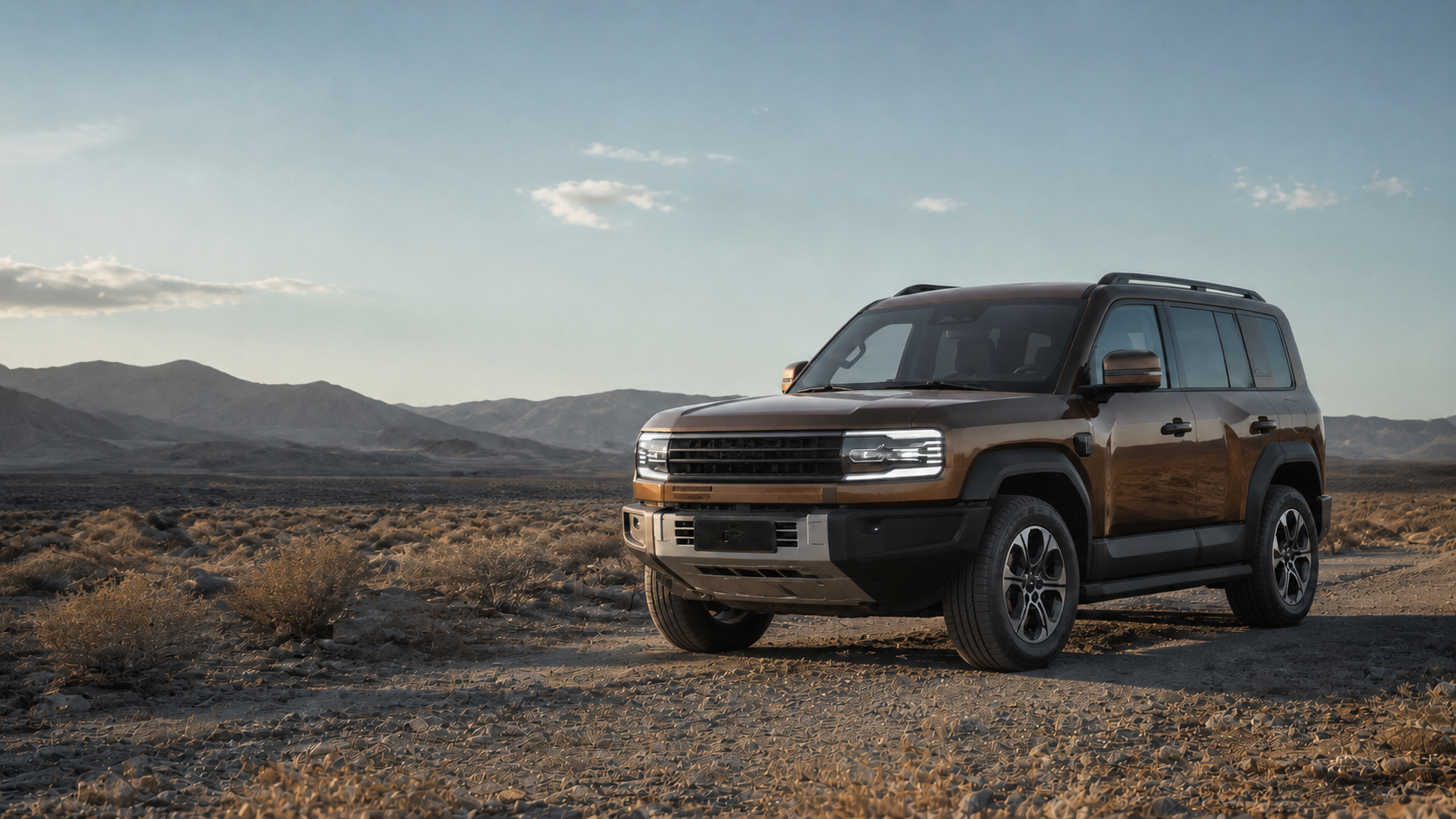
Define the actual journey before choosing hardware
Record the intended route type, ordinary road access, seasonal constraints, passengers, luggage and communications or recovery arrangements that the buyer can actually organise. Separate established travel needs from a hypothetical extreme journey. The off-road capability guide keeps applicable installed hardware and terrain limits beside those needs. Do not infer that a vehicle can travel any route because it has a body-on-frame appearance or multiple modes. Ask qualified local professionals about applicable route conditions and restrictions. A purchase brief should identify what the vehicle must do and what remains dependent on planning, driver skill and external support.
Map legitimate energy access and reserve assumptions
List practical charging and fuel access for the actual journey, including operating hours, compatibility and uncertainty. The buying without regular charging review helps distinguish ordinary access from occasional opportunities. Use labelled route assumptions instead of a brochure combined-range promise. Load, climate, surface and version differences can change real use, so retain a suitable professional operating plan without inventing a universal reserve rule. Do not describe an unsupported adaptor or an unavailable station as established capability. The presence of a hybrid engine does not eliminate the need to identify and support the installed battery and thermal systems.
Keep loads and accessories on an applicable boundary
Identify the actual passengers, luggage, fitted accessories and any intended trailer before comparing candidates. Ask for applicable documented limits and qualified assessment of the proposed configuration. The towing and load planning guide separates equipment fitment from an acceptable whole combination. A roof rack, tyre change or added protection can affect the vehicle file; none creates a universal increase in permitted loading. Compare useful carrying fit on the actual offer rather than assuming a package name proves expedition suitability. Retain what is included, what needs separate work and what remains unapproved before treating an accessory list as buyer-ready value.
Examine history that matters to the proposed use
For a used candidate, retain attributable underbody, water-exposure, structural, pack, thermal and modification evidence. The water and underbody review distinguishes disclosure from appropriate present examination. A clean wash or removed accessory does not establish earlier duty, while an off-road label does not prove damage. Give the intended route to the examiner so relevant current questions are addressed within a safe scope. Record limitations and further diagnosis rather than accepting a brief road test as complete clearance. The condition accepted for ordinary local use may not meet a buyer whose trip depends on limited remote support.
Confirm support beyond the point of sale
Ask receiving workshops what diagnosis, installed-system identification and parts ordering they can actually undertake. Keep routine service and specialist high-voltage or hydraulic work separate. The maintenance and parts guide should inform actual quotations and support limits, not create an assumed worldwide network. Record travel to the workshop, parts lead-time uncertainty and the buyer’s alternative transport plan where relevant. Do not invent a failure probability or guarantee that a spare part carried in the vehicle solves every interruption. The premium for a particular system is useful only when its operation and support fit the intended journey and ownership circumstances.
Compare a supported complete route with an alternative
Put an actual Bao 5 and an available suitable alternative on the same acquisition, preparation and operating boundary. The three-year ownership worksheet keeps future duty and costs explicitly assumed. Describe which verified carrying, comfort or terrain benefit justifies the prepared premium, and retain what the buyer must arrange independently. If the plan depends on unresolved compatibility, unavailable specialist support or unverified condition, keep the choice conditional. A replacement VIN requires a fresh review. The selected vehicle should be defensible through its evidence and usable operating plan, not through a claim that impressive hardware guarantees an uninterrupted remote journey.
Compare the acceptance conditions
- Supported fit
- Actual capability, condition and usable support match the planned journey.
- Conditional fit
- Resolve consequential energy, load or receiving-support questions before choosing.
- Different route
- A suitable alternative may meet the real task with more practical local support.
Buyer evidence checklist
- Define the actual route and carrying task.
- Map legitimate charging and fuel access.
- Verify applicable loads and installed accessories.
- Retain relevant current underbody and energy findings.
- Compare usable receiving support on both offers.
Questions before you buy
Does off-road hardware guarantee remote-route suitability?
No. Route conditions, driver responsibilities, energy access, loads, condition and support matter together.
Can ordinary engine servicing support the whole Bao 5?
Not necessarily. Installed hybrid, hydraulic and electronic systems may require separate qualified capability.