
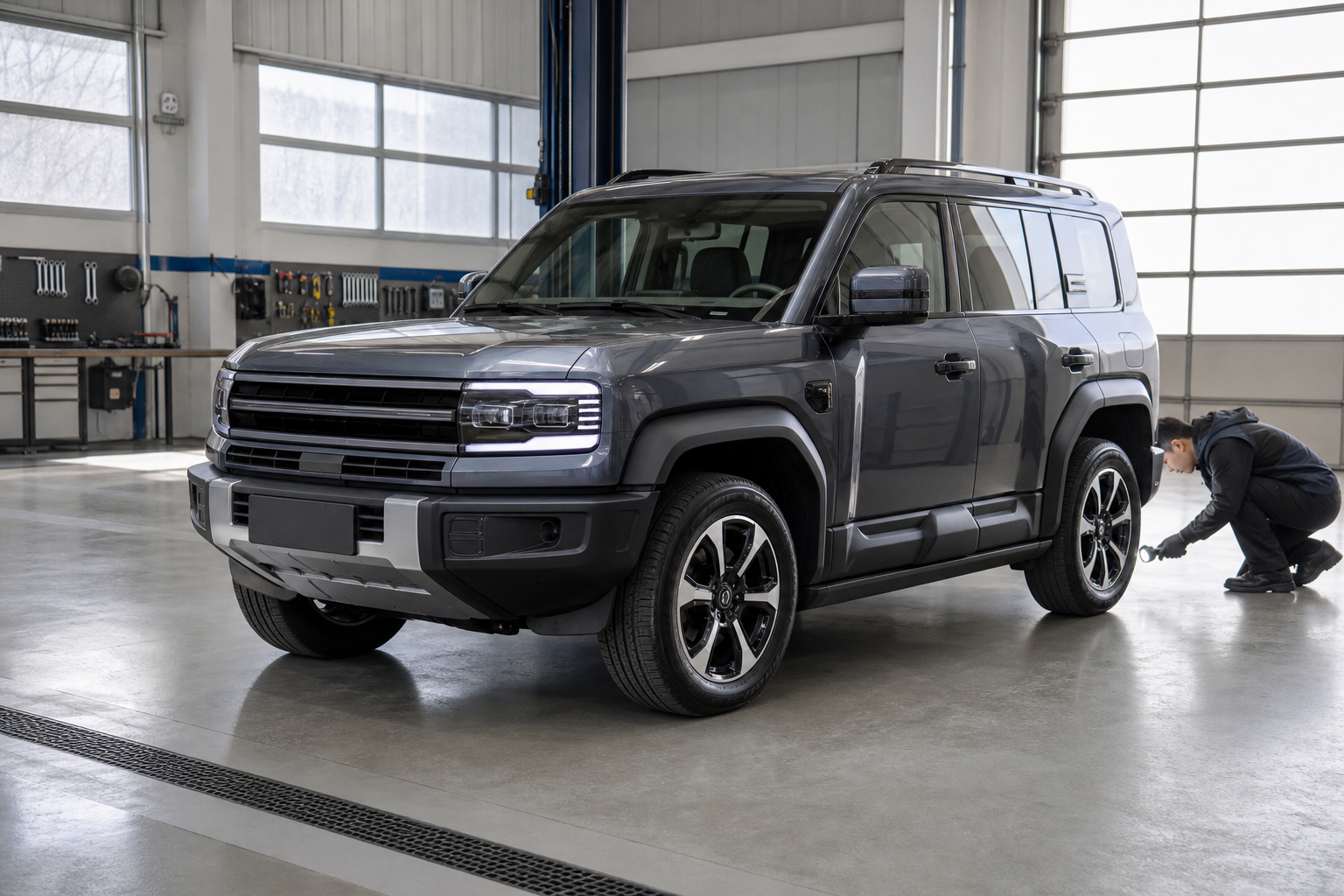
The decision on choose between bao 5 and jetour t2 by use case stays attached to one selected VIN. Record identify architecture and version, match energy access and define terrain expectations before comparing routes; keep compare cabin and load use, compare inspection evidence and calculate support-adjusted value visible through quotation and handover.
Identify architecture and version
Confirm body structure, drive system, engine, gearbox or hybrid components for each selected version. Do not transfer specifications across China and export-market products.
Evidence threshold. For identify architecture and version, Place VIN-backed specifications side by side. Link identify architecture and version to the VIN and source date. Name who checked identify architecture and version, and retain enough detail for another reviewer to reproduce the result.
Match energy access
The Bao 5 plug-in hybrid case depends partly on charging access and regional compatibility. Compare it with the exact T2 powertrain and the buyer's fuel and service environment.
Failure condition. For match energy access, Model the same daily and long-route distances. If match energy access stays open, specify whether to reject, reprice or reinspect. Do not treat seller silence about match energy access as supporting evidence.
Define terrain expectations
Verify locks, modes, clearances, tyres, underbody and recovery arrangements. Appearance alone does not establish equivalent difficult-terrain capability.
Destination effect. Compare the hardest intended route for both. Ask the destination adviser whether define terrain expectations changes customs or registration. Check charging, road use and service separately when define terrain expectations affects them, then retain the dated response.
Compare cabin and load use
Measure passenger, luggage, roof and towing requirements. Include entry height, ride, parking and daily comfort rather than treating adventure imagery as the only purpose.
Cost effect. Use the buyer's real load list. Price compare cabin and load use as its own inspection or preparation line. If compare cabin and load use creates compliance risk, show the contingency clearly rather than burying it in a general discount.
Compare inspection evidence
For used vehicles, assess repairs, underbody, powertrain, diagnostics, tyres and service history consistently. Different architectures need different specialist checks.
Custody check. Keep inspection scope differences visible. Reconfirm compare inspection evidence at each custody transfer. Seller, inspector, transporter and port records for compare inspection evidence should remain dated and tied to the same VIN.
Calculate support-adjusted value
Add parts, diagnostic, charging, service and resale considerations to the landed route. A lower purchase price can be offset by unresolved local support.
Replacement rule. State which support gaps the buyer accepts. A substitute must repeat every check for calculate support-adjusted value. Similar colour, mileage or trim cannot transfer the previous VIN’s conclusion about calculate support-adjusted value to another vehicle.
Close the file without hiding open items.
Close “Choose Between Bao 5 and Jetour T2 by Use Case” with the candidate VIN, source date and the evidence used for identify architecture and version and match energy access. Name rejected alternatives and unresolved questions, then assign responsibility for compare inspection evidence and calculate support-adjusted value. A changed vehicle or destination reopens the affected checks.
- Identify architecture and version: confirmed / open / not applicable
- Match energy access: confirmed / open / not applicable
- Define terrain expectations: confirmed / open / not applicable
- Compare cabin and load use: confirmed / open / not applicable
- Compare inspection evidence: confirmed / open / not applicable
- Calculate support-adjusted value: confirmed / open / not applicable
Three questions before commitment
What closes “Identify architecture and version”?
Place VIN-backed specifications side by side. For identify architecture and version, attach a dated source and candidate identifier, then name who produced or verified the record. A listing label is not enough to close this checkpoint.
What closes “Match energy access”?
Model the same daily and long-route distances. Mark match energy access as confirmed only when the supporting record matches the VIN and route assumptions. Otherwise show the item as open in the quotation or inspection scope.
What closes “Define terrain expectations”?
Compare the hardest intended route for both. If records about define terrain expectations conflict, preserve both sources and ask the responsible party to resolve the difference before deposit, preparation or shipping instructions.